


Next Gen Digital Healthcare Platform
Digital healthcare ecosystem streamlining patient-doctor interaction through AI-guided symptom input, consultation scheduling, e‑prescriptions and secure health data management.
- Successful inquiries and subsequent services number increased by 15%
- 27% reduction in appointment cancellations and laboratory test errors through proactive communication and precise instructions
- 61% of first-line requests automated
Overview
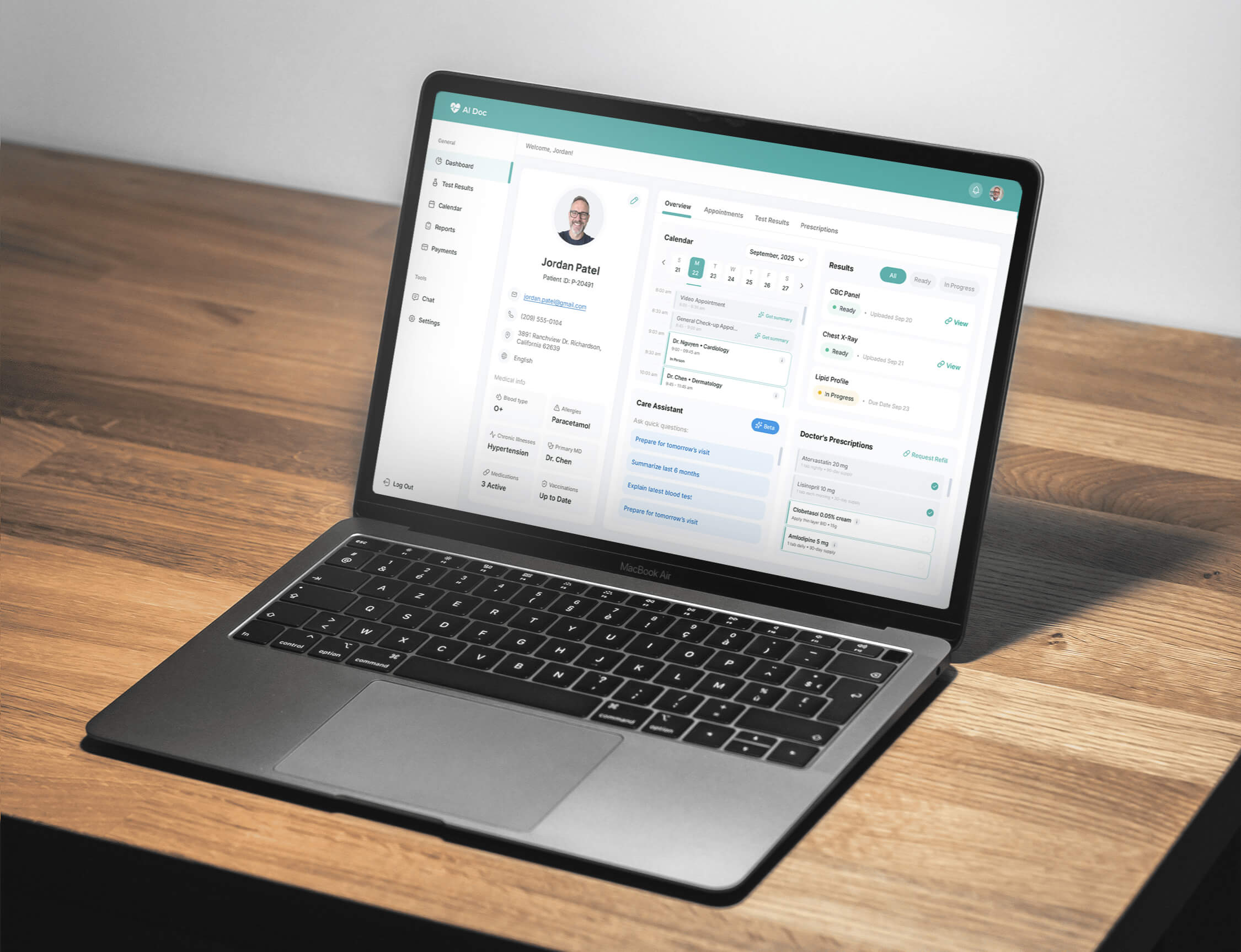
The project aimed to build a next-generation AI-powered healthcare platform that unifies clinical consultation, diagnostics and laboratory services within a single digital ecosystem.Designed for a network of clinics with in-house laboratories, the system integrates AI-driven triage, telemedicine, e-prescriptions, and laboratory process AI automation, creating a seamless patient-centered experience across every stage of care.
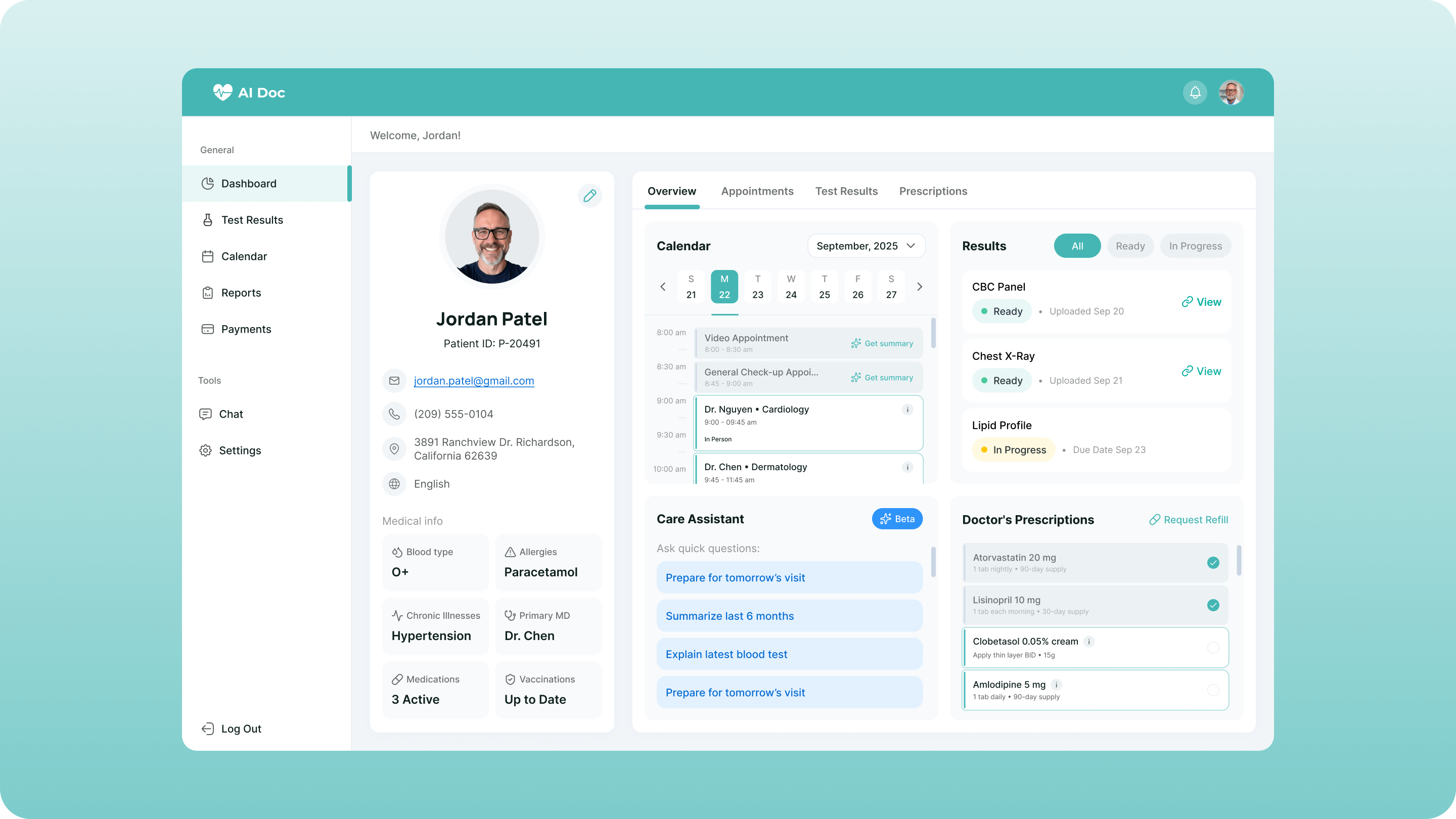
The solution empowers patients to book consultations, receive AI-guided pre-diagnostic support, manage results and access prescriptions through chat or voice channels. At the same time, it provides doctors, laboratory specialists and administrators with powerful tools for workflow management, compliance and analytics to reduce the workload.
Key business objectives included:
- Automating patient interactions across the full clinical and diagnostic journey, from symptom input and appointment booking to result delivery and prescription.
- Improving accessibility and reducing waiting times by delivering 24/7 multilingual customer support.
- Ensuring data accuracy, adherence to preparation protocols and standardization of all patient-facing communication.
- Reducing operational load on contact centers and medical staff through automation of routine tasks.
- Strengthening patient trust and satisfaction via transparent proactive communication and continuity of care.
- Enabling seamless connectivity with EHR/EMR, pharmacy networks and government e-prescription systems.
The Challenges
Before the transformation, clinical and laboratory workflows operated on disconnected digital systems, creating inefficiencies for both patients and medical staff.
- Manual request handling. Appointment scheduling, preparation instructions and lab result inquiries were processed by human operators, causing long queues and inconsistent information.
- Extended response times. Patients waited up to an hour for callbacks or chat replies regarding appointments, test preparation or results.
- Inconsistent communication quality. Instructions varied by operator and channel, leading to confusion, repeated questions and lower patient trust.
- Pre-analytical errors. Incomplete or misunderstood preparation details (fasting, medication, collection timing) led to sample rejections and repeat visits.
- Limited automation. Routine interactions from test selection to post-result guidance lacked standardization and digital flow.
- Fragmented systems. EHR/EMRs, telemedicine platforms and call centers were not integrated, preventing unified patient context.
- Compliance complexity. Lack of secure consent capture, identity verification and audit mechanisms slowed down response times for result-related inquiries.
- Accessibility gaps. Absence of multilingual support and voice transcription reduced inclusivity and accessibility.
Simple standardized inquiries such as preparation requirements or test statuses still required manual involvement of specialists, creating delays and communication gaps instead of a connected digital experience.
Our Solution
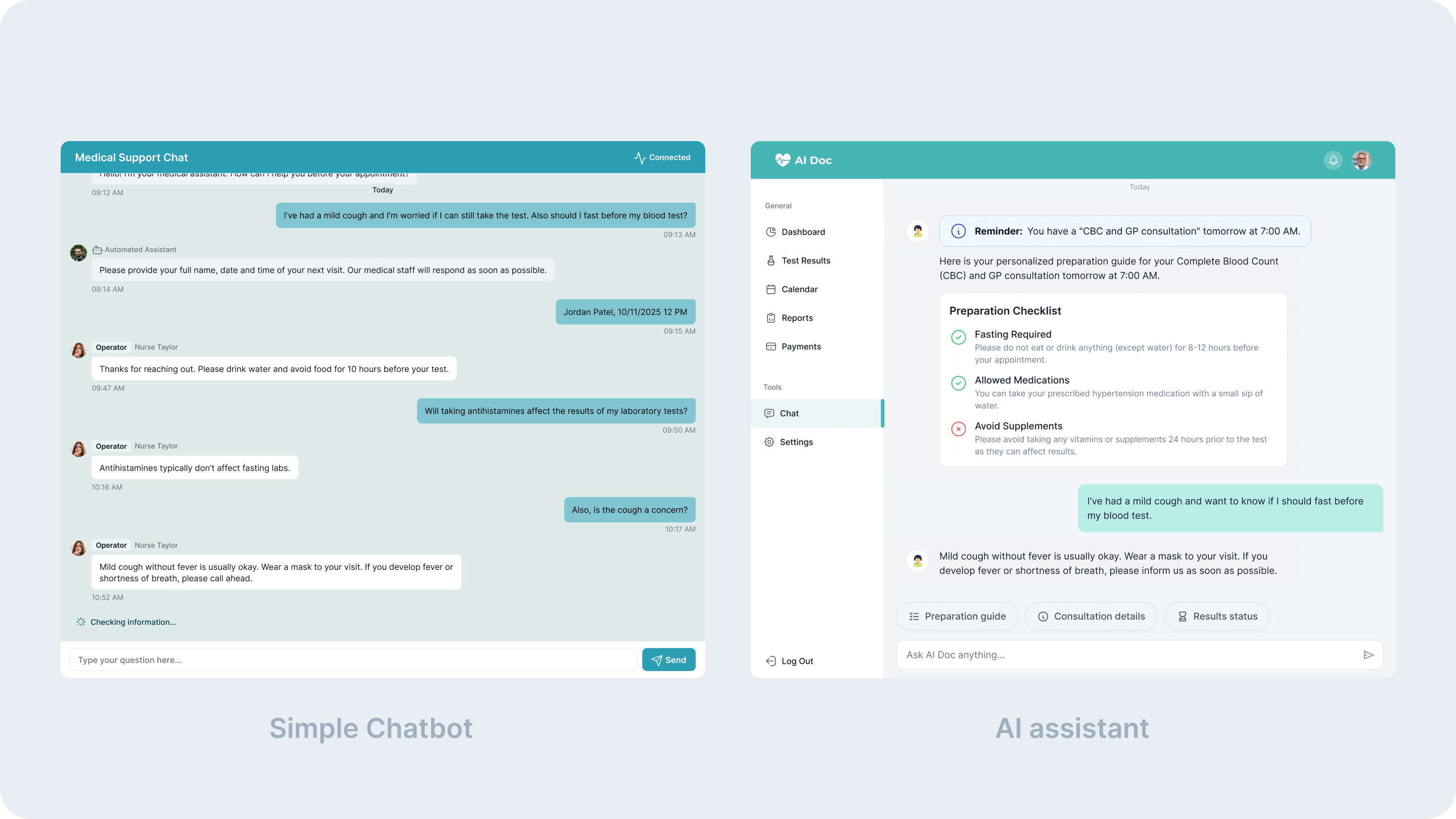
To address these challenges we implemented a comprehensive AI-driven healthcare ecosystem combining a clinical consultation platform and a laboratory automation module into one integrated solution.
The system is powered by an enterprise-grade LLM, adapted specifically for healthcare communication standards and fully integrated with electronic health records (EHR/EMRs), e-prescription systems and multiple voice communication channels.The solution delivers fast, accurate and context-aware interactions with patients while ensuring that all clinical interpretation remains with licensed healthcare professionals.
Key Capabilities include:
- Patient Service Automation. Handles high-volume routine inquiries within seconds, including symptom input, appointment booking, test selection, pre-analytical preparation, order tracking, result notifications, prescription renewal and post-result support.
- Enterprise-Grade Clinical Adaptation. The solution leverages advanced AI tools for patient interaction and data processing. Its core is the LLM fine-tuned with verified medical data, clinical SOPs and approved patient-facing wording. Built-in guardrails prevent diagnostic or medication recommendations automatically routing such cases to licensed professionals.
- AI Diagnostic and Laboratory Assistant. Integrated with LIS/LIMS, the assistant provides real-time status updates, secure result delivery and personalized preparation guidance, minimizing pre-analytical errors and optimizing laboratory throughput.
- Digital Consultations and E-Prescriptions. Patients can consult doctors online via chat or video, receive e-prescriptions signed with digital signatures and order medicines or related services through integrated pharmacy and delivery partners.
- Unified Medical Profile. A digital health card stores all consultations, laboratory results, prescriptions and appointments in one secure easy-to-navigate interface.
- Context-Retaining Dialogue. The system maintains patient context across all channels, issuing reminders, preparation guides and post-visit recommendations ensuring continuity of care.
- Compliance and Data Security. The platform incorporates consent management, secure identity verification, audit logging, data minimization and retention policies aligned with GDPR regulations configurable to local compliance requirements.
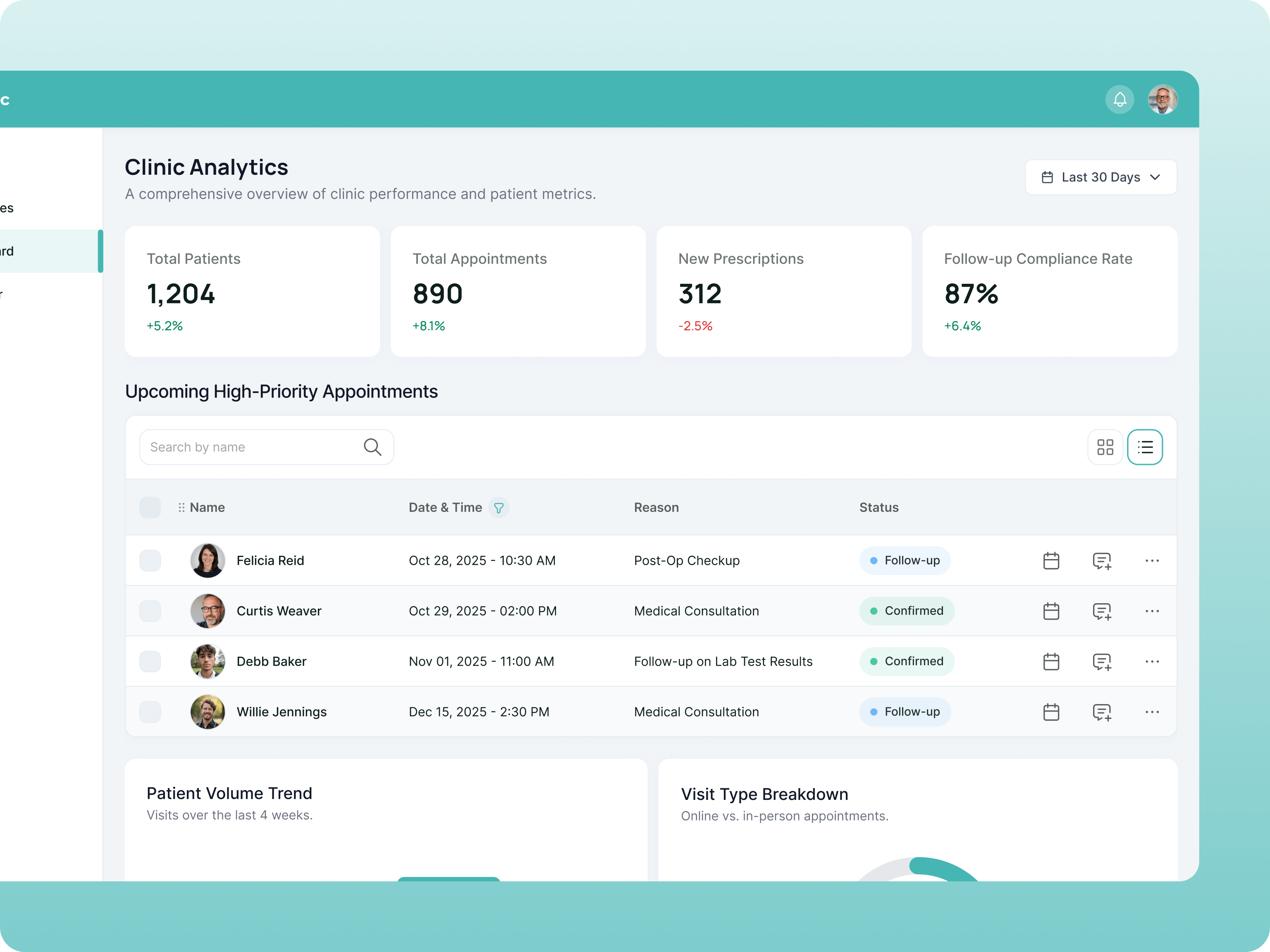
- Administrative and Analytics Dashboards. Doctors and administrators gain access to scheduling, payment tracking, KPI dashboards and service quality analytics for performance optimization and quality control.
- Voice and Chat Integration. Available through mobile apps, websites and telephony enabling natural voice queries and instant AI responses. All voice interactions are transcribed and stored for audit and escalation.
- Operator Handoffs. One-click escalation preserves full conversation history and provides AI-generated summaries and suggested responses ensuring fast, consistent and accurate human intervention.
Let’s discuss your AI idea together!
The implementation followed a phased roadmap designed to ensure safety, reliability and alignment with the highest healthcare operational standards at every stage.
- AI Model Adaptation – Alignment of LLM with clinical communication standards, SOPs, consent flows and non-diagnostic guardrails.
- Scenario Training – Development of guided flows for booking, pre-analytical preparation, status/results updates, post-result support and escalation patterns.
- System Integration – Embedding across web and voice channels, connection to LIS/LIMS, external APIs (pharmacies, payment systems, government registries), call center and operator consoles.
- Advanced Use Cases – Deployment of proactive reminders, multilingual support, analytics dashboards (SLA, ASA, preparation adherence, repeat-visit reduction) and multi-agent workflows between doctors, labs, and admins.
- Information Security and Data Privacy – Making sure the application is HIPAA/GDPR-compliant, providing fine-grained access control, audit trail of all clinical and administrative operations and data encryption.
The integrated AI ecosystem redefined how the clinics interact with patients integrating automation, empathy and precision to enhance every step of the patient journey.
- Overall operational efficiency improved by 22% without additional staffing, allowing clinicians and support staff to dedicate more time to patient care while maintaining a high standard of service quality and accuracy.
- Pre-analytical errors declined by 27%, driven by precise preparation guidance and proactive reminders that ensured patients arrived fully informed and ready for sample collection. Attendance and completion rates rose by 8% as timely notifications and clear next-step instructions simplified every stage of the journey.
- Automation of 61% of first-line requests transformed day-to-day operations, reducing operator workload by nearly half and turning fragmented exchanges into meaningful conversations. Average response times dropped from minutes to moments, setting a new operational benchmark for responsiveness and accuracy.
- Patient satisfaction grew by 20%, reflecting not only faster service but also the consistency and empathy of every interaction.
Together, these improvements strengthened the clinics standing as a modern, trusted and patient-centric healthcare provider.
FAQ
Key Highlights
What is the core purpose of the platform?
How does the platform benefit clinics and laboratories?
Does the AI component enhance patient experience?
Can the platform be customized for different healthcare providers?
How does the system ensure data privacy and regulatory compliance?
What measurable outcomes have been achieved with the platform?
Connect With Our AI Experts
Get a quote and find out more about your next AI solution
1
Sunmait experts contact you within 24h.
2
We discuss your project idea.
3
We sign an NDA for complete transparency.
4
We submit a comprehensive project proposal with estimates, timelines, etc.